By The Jill Armstrong Team
A wine cellar is one of those home features that rewards you in two directions at once. It makes daily life more enjoyable, and it makes your home more compelling to the next buyer who walks through the door. For homeowners in Iowa City and throughout Johnson County, a thoughtfully designed wine cellar represents one of the more satisfying luxury upgrades available, because it combines genuine function with the kind of considered design that defines homes at the top of the market.
We advise homeowners across Iowa City, Coralville, North Liberty, and Tiffin on improvements that strengthen their properties in ways that last. A wine cellar, when designed and executed properly, delivers on both counts.
Key Takeaways
- Proper wine storage requires stable temperature between 55 and 65 degrees Fahrenheit, humidity between 60 and 70 percent, minimal vibration, and no ultraviolet light exposure
- Iowa City homes with below-grade finished spaces and walk-out lower levels offer ideal structural conditions for wine cellar installation
- Cooling system selection is the single most important mechanical decision in any wine cellar project and should be matched to room size, insulation quality, and collection volume
- Racking materials including redwood, mahogany, metal, and acrylic each carry distinct aesthetic and durability profiles suited to different design directions
- A well-executed wine cellar differentiates a luxury listing in the Johnson County market and signals the overall quality of a home's finishes and design
- The Jill Armstrong Team connects homeowners with trusted local contractors and provides market context for which upgrades deliver the strongest returns in Iowa City
Identifying the Right Location in Your Home
The first decision in any wine cellar project is spatial, and it is the one that every other decision flows from. Location determines what is structurally possible, how much mechanical work is required, and how well the finished room will actually perform over time.
Below-grade spaces are the most naturally suited to wine storage. Finished basements and lower levels in Iowa City homes benefit from ground-insulated temperature stability and protection from sunlight, both of which support the environmental consistency that wine aging demands. Homes in established neighborhoods like Sycamore and the Peninsula, as well as newer construction in Coralville and North Liberty, frequently include walk-out lower levels with the footprint and structural flexibility to accommodate a dedicated wine room without significant renovation.
The cellar does not need to occupy a large footprint. A well-insulated and properly sealed space of 25 to 30 square feet can store several hundred bottles effectively. Converted closets, underutilized utility rooms, and dedicated alcoves within finished basements are all viable starting points. What the space must have is the capacity to be fully insulated, vapor-sealed, and climate-controlled to the specifications that real wine storage requires.
Below-grade spaces are the most naturally suited to wine storage. Finished basements and lower levels in Iowa City homes benefit from ground-insulated temperature stability and protection from sunlight, both of which support the environmental consistency that wine aging demands. Homes in established neighborhoods like Sycamore and the Peninsula, as well as newer construction in Coralville and North Liberty, frequently include walk-out lower levels with the footprint and structural flexibility to accommodate a dedicated wine room without significant renovation.
The cellar does not need to occupy a large footprint. A well-insulated and properly sealed space of 25 to 30 square feet can store several hundred bottles effectively. Converted closets, underutilized utility rooms, and dedicated alcoves within finished basements are all viable starting points. What the space must have is the capacity to be fully insulated, vapor-sealed, and climate-controlled to the specifications that real wine storage requires.
The Four Environmental Conditions That Drive Every Design Decision
Wine is sensitive to its environment in ways that are well understood and consistently predictable. Getting the environment right is not a preference. It is the baseline requirement from which all design and material choices follow.
Temperature stability is the most critical variable. The target range for wine storage is 55 to 65 degrees Fahrenheit, with 60 degrees representing the broadly accepted ideal. Fluctuations within that range are manageable. Repeated swings above or below it accelerate the chemical processes inside the bottle and compromise both current drinkability and long-term aging potential.
Humidity must be maintained between 60 and 70 percent relative humidity. Too low, and corks dry out and contract, allowing oxygen into the bottle. Too high, and mold develops on labels and wooden racking components. A properly specified cooling system manages both temperature and humidity simultaneously.
Vibration is less commonly discussed but genuinely consequential. Ongoing mechanical vibration disturbs sediment in aging bottles and interferes with the slow chemical development responsible for flavor complexity. Locating a wine cellar away from HVAC equipment, laundry rooms, and high-traffic areas of the home reduces vibration exposure meaningfully.
Ultraviolet light degrades wine over time by accelerating oxidation reactions in the liquid. Wine cellar lighting should rely exclusively on low-UV LED fixtures, and any glass elements in the room, whether doors, panels, or enclosures, should use UV-filtering glass as a standard specification.
Temperature stability is the most critical variable. The target range for wine storage is 55 to 65 degrees Fahrenheit, with 60 degrees representing the broadly accepted ideal. Fluctuations within that range are manageable. Repeated swings above or below it accelerate the chemical processes inside the bottle and compromise both current drinkability and long-term aging potential.
Humidity must be maintained between 60 and 70 percent relative humidity. Too low, and corks dry out and contract, allowing oxygen into the bottle. Too high, and mold develops on labels and wooden racking components. A properly specified cooling system manages both temperature and humidity simultaneously.
Vibration is less commonly discussed but genuinely consequential. Ongoing mechanical vibration disturbs sediment in aging bottles and interferes with the slow chemical development responsible for flavor complexity. Locating a wine cellar away from HVAC equipment, laundry rooms, and high-traffic areas of the home reduces vibration exposure meaningfully.
Ultraviolet light degrades wine over time by accelerating oxidation reactions in the liquid. Wine cellar lighting should rely exclusively on low-UV LED fixtures, and any glass elements in the room, whether doors, panels, or enclosures, should use UV-filtering glass as a standard specification.
Selecting a Cooling System That Matches Your Cellar
The cooling system is where mechanical performance meets long-term reliability, and it is the component that most directly determines whether a wine cellar functions as intended or becomes an expensive storage closet. Three system categories cover the majority of residential wine cellar applications.
Through-the-wall cooling units are self-contained systems that mount between the cellar and an adjacent conditioned or unconditioned space, exhausting heat through the wall. They are well suited to smaller cellars, straightforward to install, and represent the most accessible entry point among dedicated wine cooling options.
Ducted split systems separate the evaporator and condenser into two distinct units connected by refrigerant lines. The condenser can be located in a utility room, mechanical space, or exterior location, which reduces noise within the cellar and allows for more precise climate management in larger or more demanding installations. These systems are the preferred specification for wine rooms where collection size and long-term performance expectations are high.
Self-contained cooling cabinets integrate the entire system within a single enclosure and are best suited to smaller display cellars or wine rooms where simplicity of installation and visual cleanliness are priorities. They are less powerful than split systems but perform well within their designed capacity range.
Working with an Iowa City HVAC contractor who has specific experience with climate-controlled specialty rooms is important. The Jill Armstrong Team maintains relationships with trusted Johnson County contractors and is always happy to make those introductions for homeowners planning a cellar installation.
Through-the-wall cooling units are self-contained systems that mount between the cellar and an adjacent conditioned or unconditioned space, exhausting heat through the wall. They are well suited to smaller cellars, straightforward to install, and represent the most accessible entry point among dedicated wine cooling options.
Ducted split systems separate the evaporator and condenser into two distinct units connected by refrigerant lines. The condenser can be located in a utility room, mechanical space, or exterior location, which reduces noise within the cellar and allows for more precise climate management in larger or more demanding installations. These systems are the preferred specification for wine rooms where collection size and long-term performance expectations are high.
Self-contained cooling cabinets integrate the entire system within a single enclosure and are best suited to smaller display cellars or wine rooms where simplicity of installation and visual cleanliness are priorities. They are less powerful than split systems but perform well within their designed capacity range.
Working with an Iowa City HVAC contractor who has specific experience with climate-controlled specialty rooms is important. The Jill Armstrong Team maintains relationships with trusted Johnson County contractors and is always happy to make those introductions for homeowners planning a cellar installation.
Racking Systems, Materials, and the Aesthetic Direction of the Room
Once the environmental and mechanical foundations are established, the design of the wine cellar becomes genuinely rewarding creative work. Racking configuration, material selection, flooring, lighting, and enclosure design all contribute to a room that functions well and feels exceptional to be in.
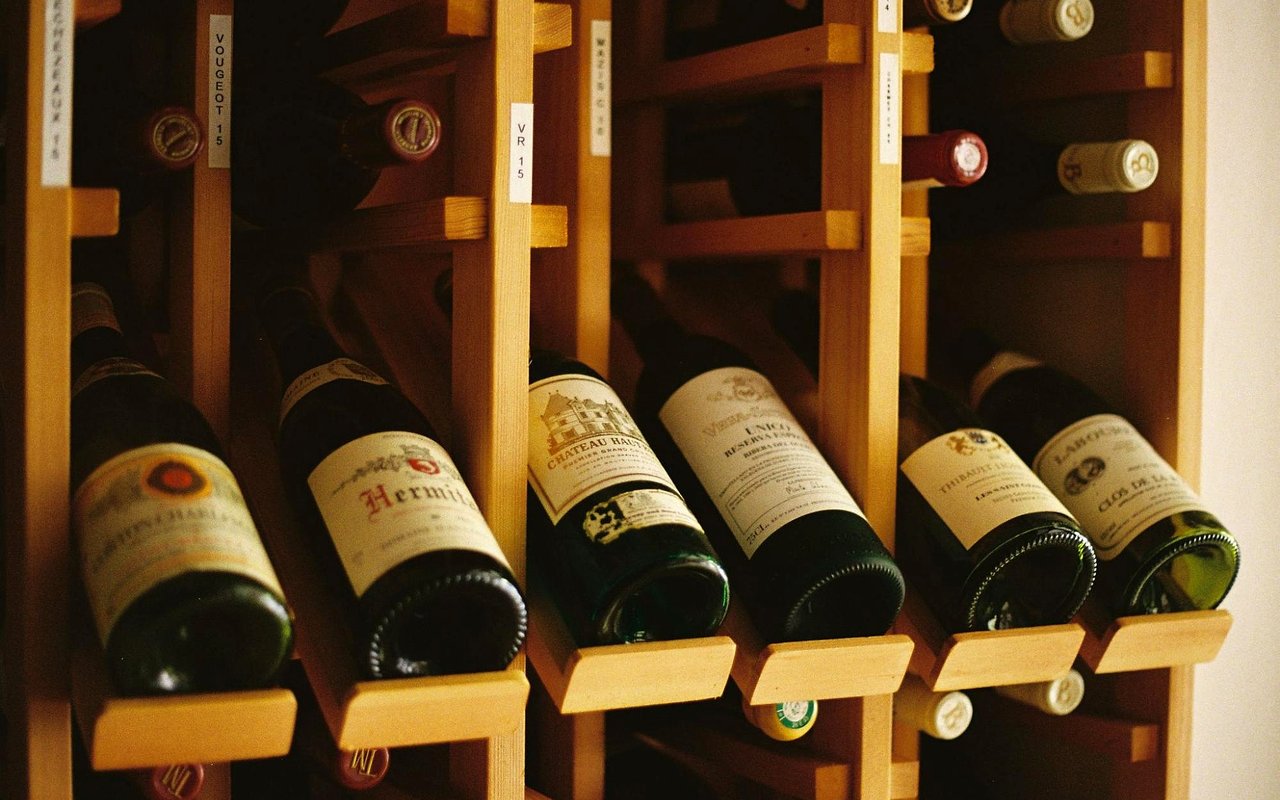
Redwood and mahogany remain the traditional standards for wine cellar racking because both are naturally moisture-resistant, dimensionally stable under humid conditions, and age with a warmth and richness that complements the sensory character of a well-stocked cellar. Custom millwork in either species can incorporate individual bottle slots, diamond bins for bulk storage, display rows for label-forward presentation, and dedicated sections for magnums and large-format bottles.
Metal racking in wrought iron or powder-coated steel offers a more contemporary profile that appeals strongly to buyers who favor modern luxury aesthetics. These systems are durable, easy to reconfigure, and photograph with a clarity and visual weight that shows well in listing presentations.
Flooring choices in a wine cellar environment benefit from materials that manage moisture gracefully and contribute to the room's atmosphere. Natural slate, honed limestone, and tumbled travertine are consistent choices in Johnson County luxury homes because they are thermally stable, moisture-tolerant, and carry an Old World character that suits the purpose of the room.
Glass enclosures and custom iron doors make the wine cellar visible from adjacent living and entertaining spaces, integrating the collection into the design vocabulary of the home and creating a natural focal point during gatherings. For homes where the lower level is used for entertaining, a glass-enclosed wine room visible from the bar or lounge area is one of the most effective design investments available.
Redwood and mahogany remain the traditional standards for wine cellar racking because both are naturally moisture-resistant, dimensionally stable under humid conditions, and age with a warmth and richness that complements the sensory character of a well-stocked cellar. Custom millwork in either species can incorporate individual bottle slots, diamond bins for bulk storage, display rows for label-forward presentation, and dedicated sections for magnums and large-format bottles.
Metal racking in wrought iron or powder-coated steel offers a more contemporary profile that appeals strongly to buyers who favor modern luxury aesthetics. These systems are durable, easy to reconfigure, and photograph with a clarity and visual weight that shows well in listing presentations.
Flooring choices in a wine cellar environment benefit from materials that manage moisture gracefully and contribute to the room's atmosphere. Natural slate, honed limestone, and tumbled travertine are consistent choices in Johnson County luxury homes because they are thermally stable, moisture-tolerant, and carry an Old World character that suits the purpose of the room.
Glass enclosures and custom iron doors make the wine cellar visible from adjacent living and entertaining spaces, integrating the collection into the design vocabulary of the home and creating a natural focal point during gatherings. For homes where the lower level is used for entertaining, a glass-enclosed wine room visible from the bar or lounge area is one of the most effective design investments available.
What a Wine Cellar Communicates to Iowa City Luxury Buyers
From a market perspective, a wine cellar does something specific in a listing: it tells buyers that the home was designed with intention at every level. In Iowa City's upper-tier market, where buyers frequently include university leadership, physicians affiliated with UI Health Care, and senior professionals who have purchased and sold multiple homes, the quality of specialty amenities is evaluated with a discerning eye.
The Jill Armstrong Team has seen well-executed wine cellars contribute meaningfully to buyer engagement and listing differentiation in the Johnson County market. They perform well in photography, they anchor conversations during showings, and they signal the overall caliber of the home's finishes and design decisions in a way that general upgrades simply do not.
The Jill Armstrong Team has seen well-executed wine cellars contribute meaningfully to buyer engagement and listing differentiation in the Johnson County market. They perform well in photography, they anchor conversations during showings, and they signal the overall caliber of the home's finishes and design decisions in a way that general upgrades simply do not.
FAQ: Wine Cellars in Iowa City Luxury Homes
What does a wine cellar installation typically cost in Iowa City?
Project costs vary significantly based on room size, cooling system type, racking material, and finish level. A functional climate-controlled wine room can be completed for several thousand dollars at the modest end. Fully custom installations with stone floors, glass enclosures, and high-end millwork represent a considerably larger investment. We are happy to connect homeowners with local contractors for accurate estimates.
Does a wine cellar require a dedicated electrical circuit?
Yes. Cooling systems require dedicated circuits sized to the unit's specifications. Proper electrical planning should be part of the project scope from the beginning, and a licensed electrician with specialty room experience should be involved early.
How does a wine cellar affect resale value in the Iowa City market?
A well-designed wine cellar adds measurable buyer appeal in the luxury tier and differentiates a listing from comparable properties. Its contribution to sale price depends on execution quality and how well it fits the home's overall design and price positioning.
Can an existing basement room be converted into a wine cellar?
Yes, and this is among the most common approaches we see in Johnson County. The key components of a successful conversion are thorough insulation, a vapor barrier, a properly specified cooling system, and racking designed to fit the space. The Jill Armstrong Team can connect you with local professionals experienced in exactly this type of project.
Is a wine cellar a good investment even if I do not have a large collection?
A thoughtfully designed wine room adds value and visual appeal regardless of collection size. Even a cellar designed for a few hundred bottles, executed well and integrated into the home's design, performs strongly in the luxury market.
Ready to Elevate Your Iowa City Home?
A wine cellar is an investment in how you live in your home today and in how buyers experience it tomorrow. If you are considering adding one to your Iowa City property, or want an honest conversation about which luxury upgrades deliver the strongest returns in Johnson County's market, The Jill Armstrong Team is the place to start.